Why cattle?
Ask three people where the name came from and you’ll get three answers. All of them are true. (There are actually five.)
The herdsmen of the hills
When Spartacus broke out of the gladiator school at Capua, the first to join him weren’t soldiers. According to Plutarch, they were herdsmen and shepherds from the hills: tough, practical people who each knew one thing cold. Spartacus didn’t win with an army of generalists. He won with specialists.
Cattle country
The company was incorporated in Sheridan, Wyoming, which is cattle country. On a ranch the herd does the work and the rancher sets the direction. That’s the whole model: the herd works, the Commander drives, and you own the ranch.
The engineers’ secret
Engineers have an old saying: treat your servers like cattle, not pets. Pets get names and special care; cattle are interchangeable. We took the idea and went the other way. We bred champions: every specialist in the herd has a name, a job and a pedigree.
The truth
We stole it from television. On Landman, an oil outfit calls itself a cattle company so nobody looks twice. We loved that. Then we added “Robotics” to the front, which ruined the disguise completely. Now everybody looks twice.
Bonus: Landman comes from Taylor Sheridan. The company was born in Sheridan, Wyoming. We’re choosing to believe that means something.
The Purple Cow
In 1895 Gelett Burgess published four lines that became one of the most quoted bits of nonsense in America:
I never hope to see one;
But I can tell you, anyhow,
I’d rather see than be one.
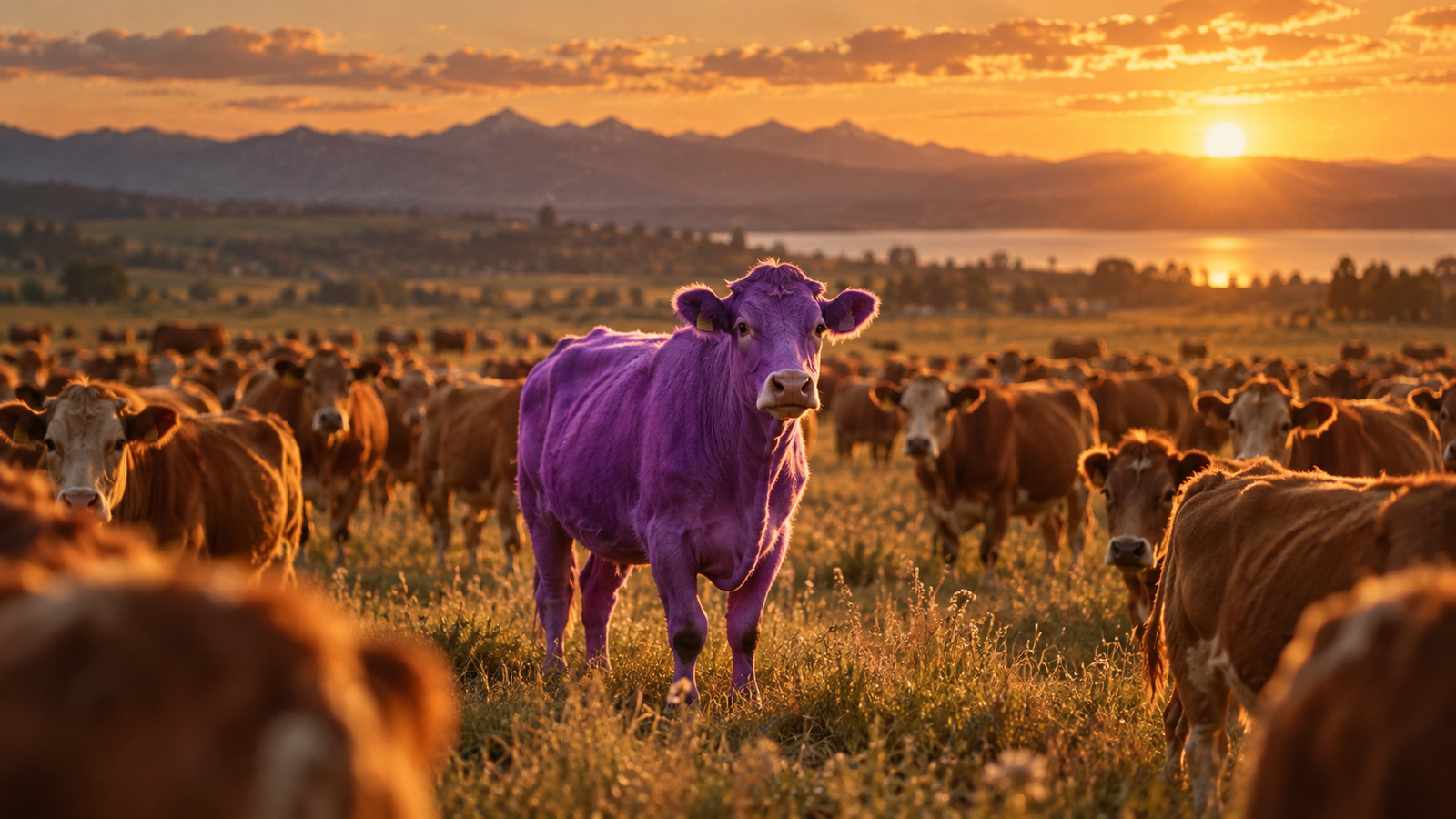
He got so sick of hearing it that he wrote a sequel, threatening anyone who quoted it again. A century later, Seth Godin borrowed the cow for his book on being remarkable: in a field of brown cows, the purple one is the only one anybody remembers.
That’s the job. Be the purple cow in your field.
Good news: the poem is in the public domain. Mr. Burgess can’t touch us.